
English source · 2 min
Composed Studio working views: 29 October 2026
This acceptance uses a disposable local shop, the real Rust server and PostgreSQL, and a headed Chromium browser at 1600 × 1000. Payments remain simulated. It is not a hosted rollout acceptance. The current public runtime is recorded in Status.
Actual model and native UI
The configured local Ollama model qwen3.6:35b received a request for a product
working view. The existing merchant planner returned entity: products, empty
criteria and components: [records, details]. No commerce change was proposed.
The model selected two components; product intake was enabled manually in the
resulting native view.
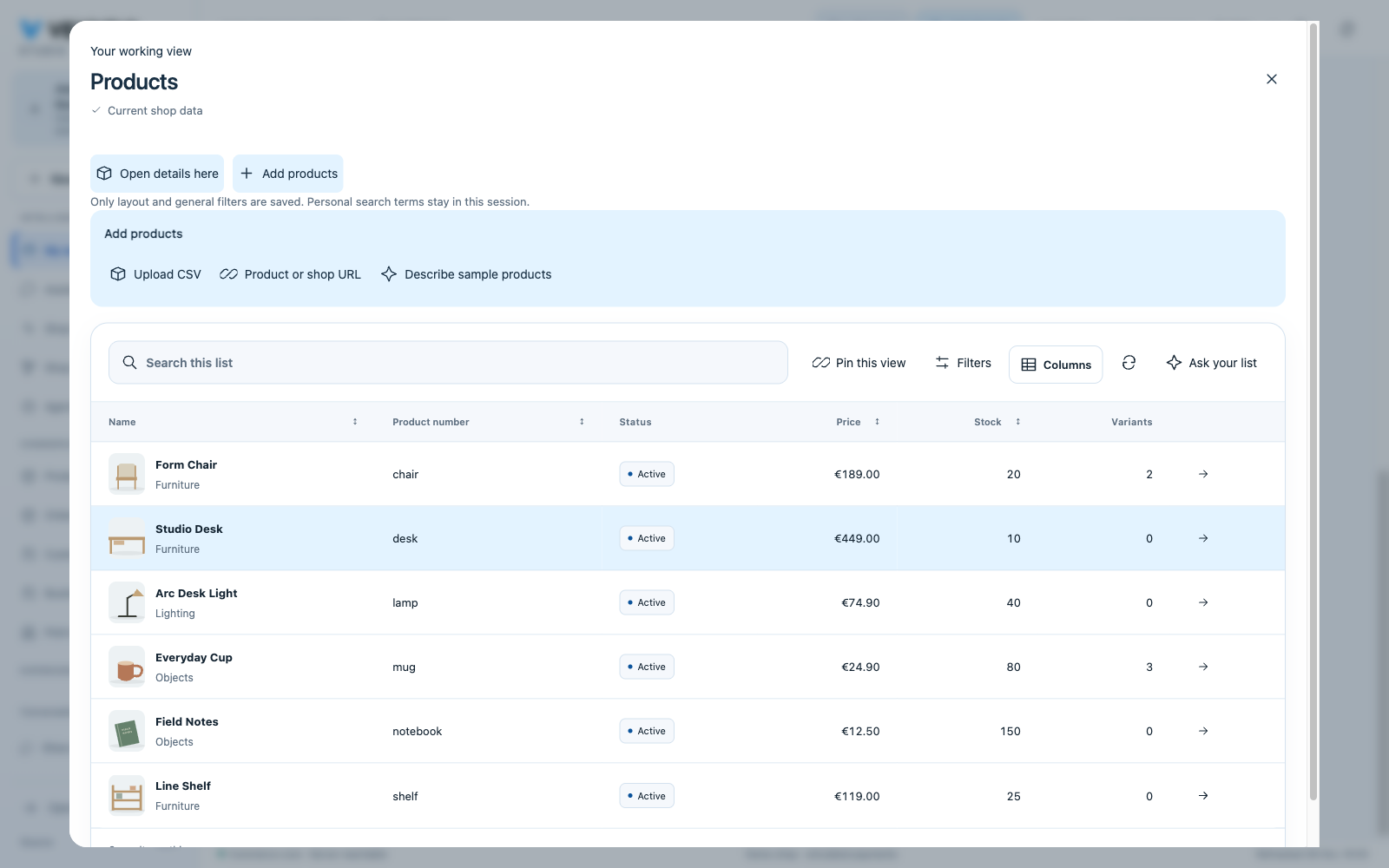
The actual Studio opened six native product rows with current prices, stock and images. A saved pin retained records, details and intake after a full reload. Opening the desk used the existing product editor. Closing with a changed name showed an unsaved-change confirmation; cancelling retained the edited draft. Returning the name to its original value allowed navigation without a mutation.
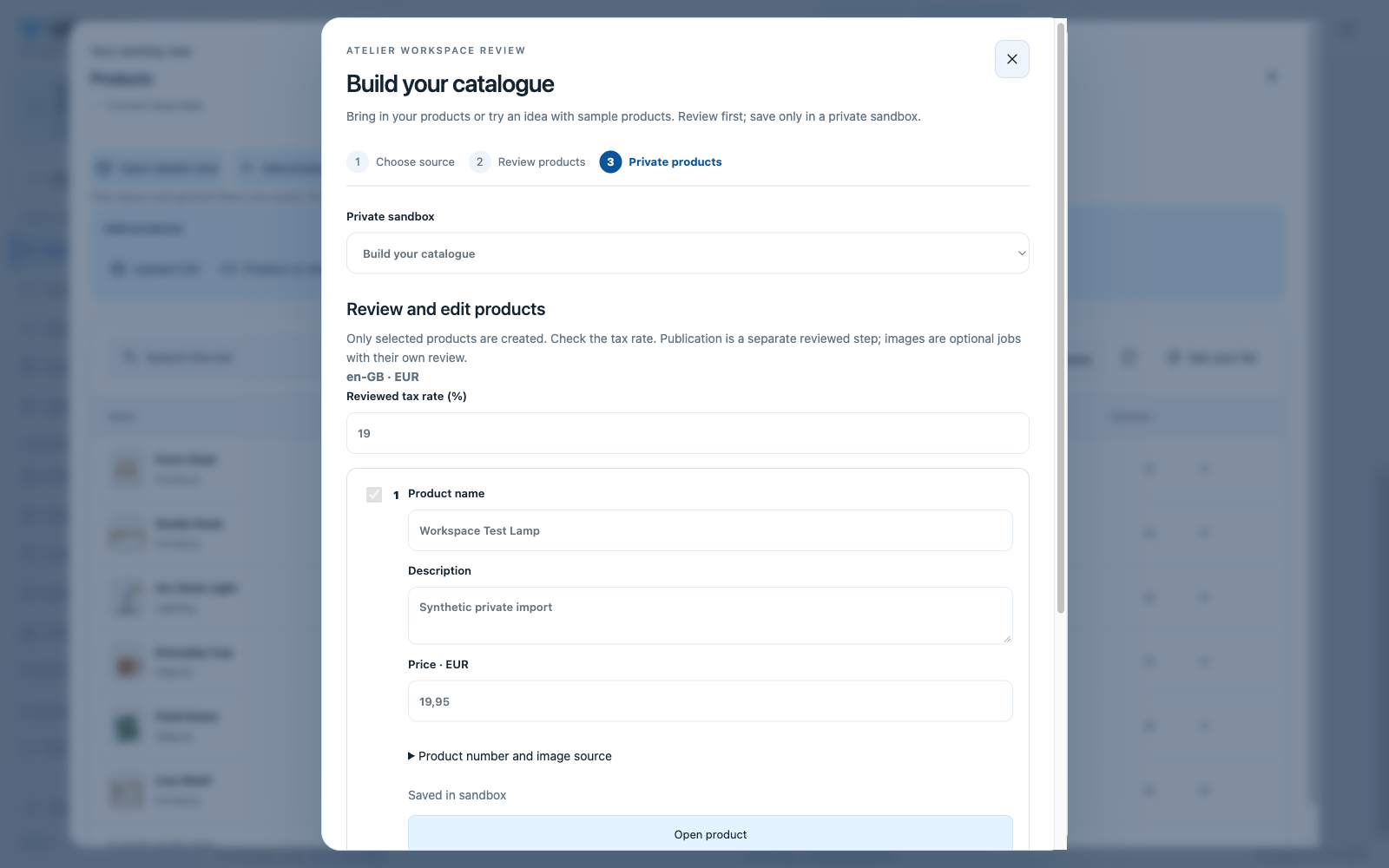
The CSV journey uploaded a real synthetic file, created a private catalogue
sandbox, reviewed a EUR 19.95 product and its explicit tax rate, then saved it.
API readback confirmed one workspace-lamp product in that sandbox and zero in
the live catalogue. No publication was performed.
Contracts and regression coverage
The schema permits only registered records/details/intake bindings. Unknown components, rows, tenant fields, duplicated components and non-product intake reject before an executable view is saved. Historic views retain the records default. Personal workspace persistence preserves existing CAS/history and excludes private searches or authority fields. Current domain and PII rights remain required for API data; layout preferences grant no access.
The complete frontend suite passes 829 tests. Tests cover real directory rendering, revoked rights, synchronous request-context fencing, pin CAS and private-filter exclusion, dirty editor navigation and nested modal confirmation. The native workspace suite, strict Clippy and formal extraction checks pass. Actual Rust/PostgreSQL HTTP checks pass for users (20 cases), provider/planner contracts (53 cases) and visual workspace/publication. These include role revocation with the original session, rejected injected compositions, personal pin CAS/history and foreign-tenant denial. The provider wire checks use synthetic HTTP providers; the separate Qwen/browser journey above uses the actual local model. Final CI and hosted delivery are recorded as they complete.
Public follow-through
The configured public gpt-6.1-sol model prepared the native working view on
29 October. Open, pin, full reload, reuse, CSV preview, private product creation
and the actual native editor were observed. The imported product then completed
a simulated public sandbox purchase with return and an empty basket.
Exact public steps and screenshots.