
English source · 4 min
Actual WooCommerce inward migration: 29 October 2026
Local acceptance used actual WordPress 6.8.3, WooCommerce 10.3.0 and MariaDB 11.4 in a separate disposable Compose project. The unchanged independent Rust migration service called actual WooCommerce/WordPress REST routes and downloaded original source media. This is local source-service and native browser acceptance, not hosted migration delivery or production TLS acceptance.
The source recipe and seed are app-owned test fixtures. The loopback fixture models a TLS-terminating ingress for WooCommerce read-key authentication; local media uses explicit fixture HTTP. Production source transport retains HTTPS, DNS/address restrictions and no redirects. No API key, password or raw customer export is included in this evidence.
Original source and actual target
| Area | Original source | Matching native target |
|---|---|---|
| Categories | Uncategorized and Ceramics | 2 private native categories |
| Products | 22 top-level products, one variable parent with two concrete variants | 24 native products with exact original prices, parent IDs, Colour options and zero initial active stock |
| Media | One original PNG used by parent, simple product and both variants | 4 original-byte/product associations, stable IDs and byte digests |
| Authored pages | Our workshop | 1 editable private native content page |
| Customers | One original customer with addresses | 1 CRM record; no invented login credentials |
| Historical orders | Original completed order with two cups and delivery | 1 historical order, exactly 4,470 EUR minor units; no new payment or stock effect |
| Reviews | Original five-star review | 1 hidden moderated review, no invented purchase verification |
| Coupons | Ten percent coupon, limit 5 and prior usage 2 | 1 inactive native promotion with 3 remaining uses |
Default WordPress samples and WooCommerce application pages are drafts in this fixture; they are not represented as migrated checkout/account implementations. The small PNG is a byte/association fixture, not a product photograph.
All eight areas passed actual current-native-field comparison. Independently requeueing each reviewed batch returned the same IDs/counts and matching fields. Native page evidence remained in the existing shared app storage; no table or queue was introduced. Catalogue, page and original media changes were deliberately published through a selected release; operational CRM/order/review/coupon data were not sandbox release selections.
Actual interruption and recovery
The owned Rust migration process was killed at 4 percent of the product batch, after at least one native write. After a fresh process start and ordinary native lease expiry, an explicit uncertain-outcome retry continued the saved job. No checkpoint, lease or database clock was edited. All 24 reviewed product records then compared matching. The other saved page imports and a full independent replay also completed through the actual Core outbox, callback and domain writers.
Browser finding and repair
The first browser purchase succeeded but revealed literal <p>/<strong> tags in
the imported product description. Source HTML had been stored as the plain native
description. The app now reuses its bounded authored-page parser to prepare a plain
summary and editable native rich document. Generic Core intake maps the optional
native rich description through current language keys; current-field inspection
compares that source-owned rich content too. Source-specific HTML parsing remains
inside the migration app.
Tests first reproduced the normalizer and native-storage failures. They now cover formatted/entity-decoded content, actual localized storage, manual rich-content difference detection and restoration. Executable links, scripts, embeds and malformed rich mapping reject through the parser/native product validator. Existing imports are not rewritten silently: a changed normalized source snapshot retains the normal review/conflict behavior. Final acceptance used a new synthetic destination.
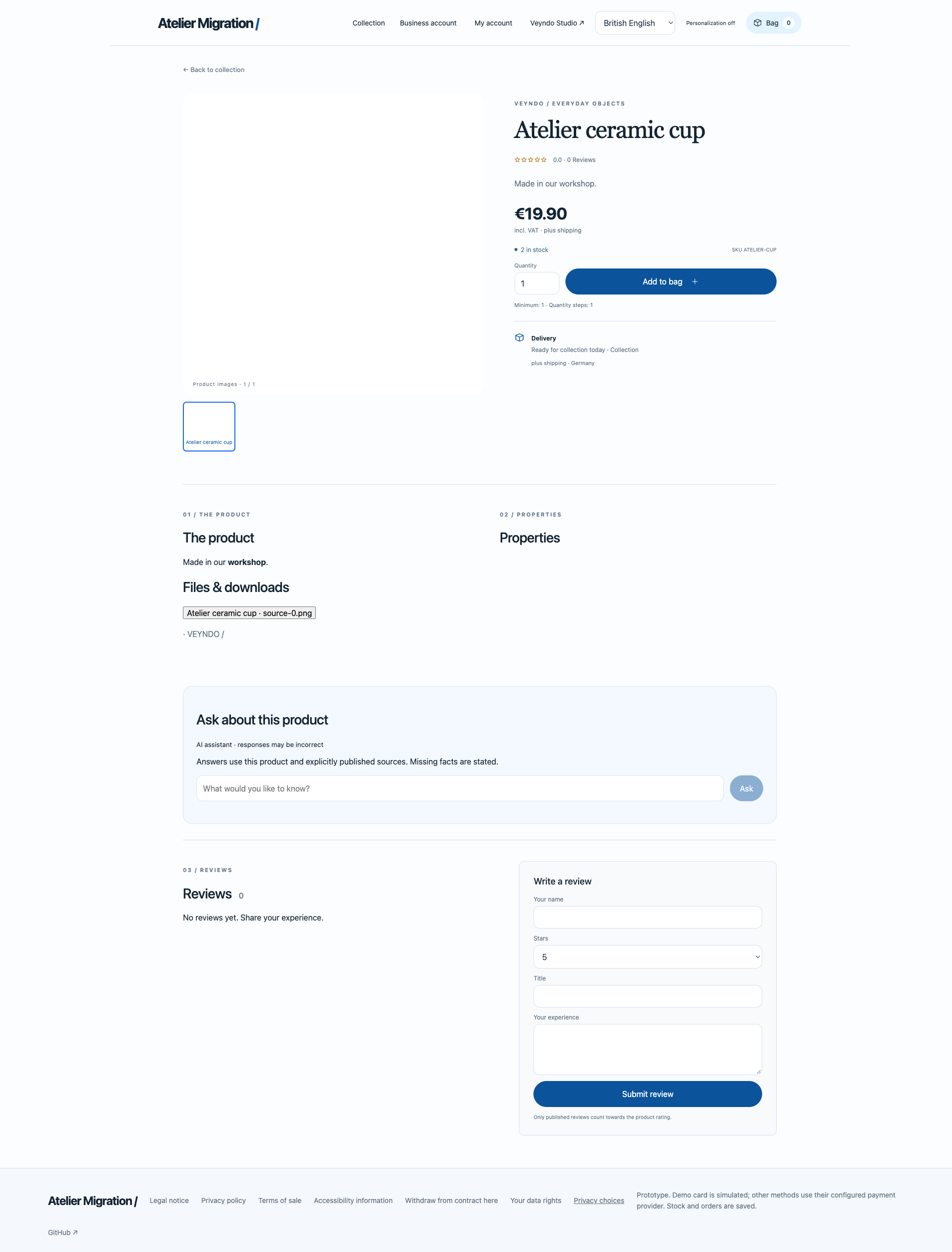
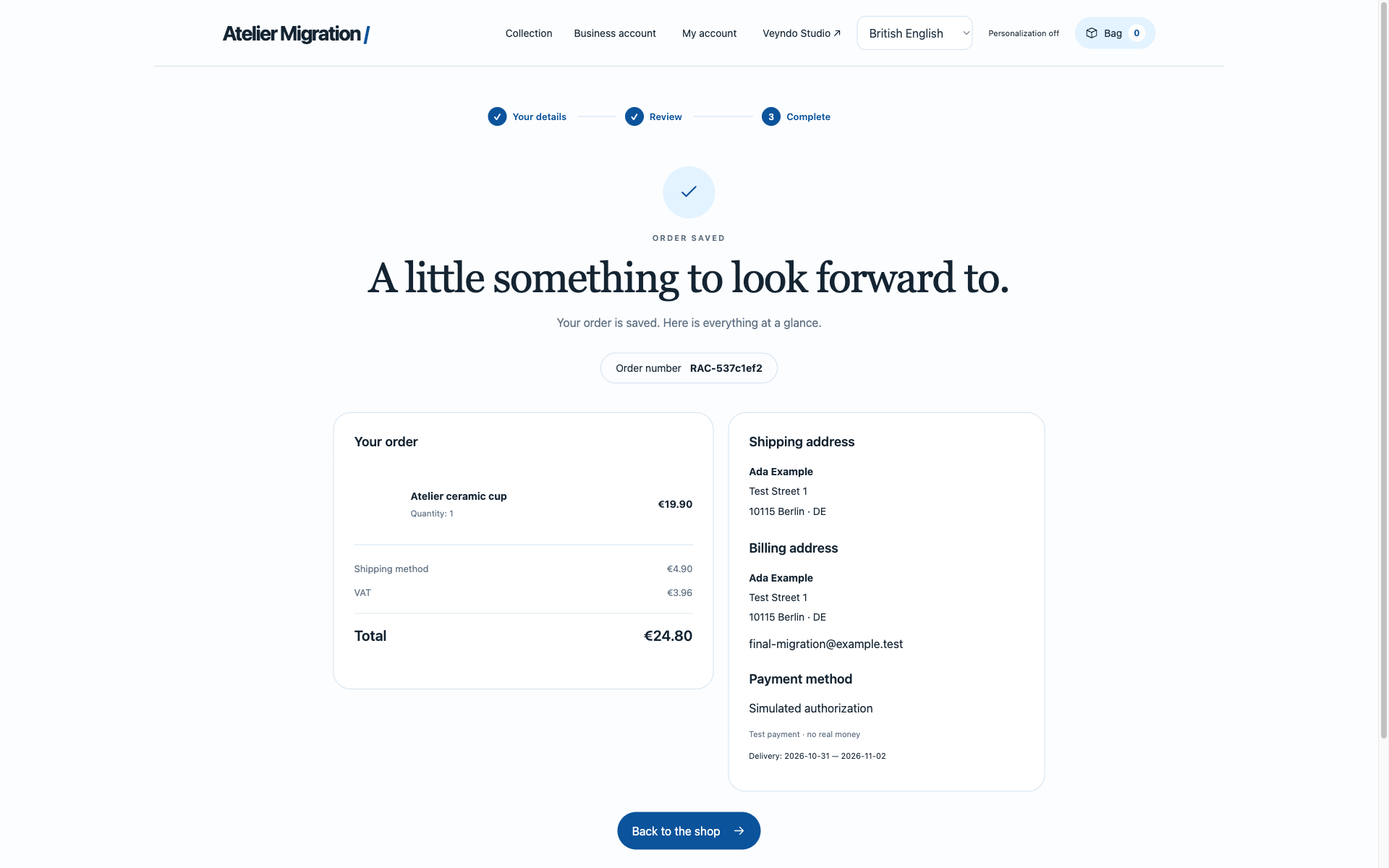
The final headed Chromium purchase used that newly migrated product and actual
native contact/address/delivery forms. Order RAC-537c1ef2, ID
537c1ef2318a4f4e87947efb9e0d601c, contains one cup at EUR 19.90, delivery
EUR 4.90, total EUR 24.80, included VAT EUR 3.96. Payment is explicitly
simulated, with realMoneyCharged=false. Stock decreased once from 3 to 2.
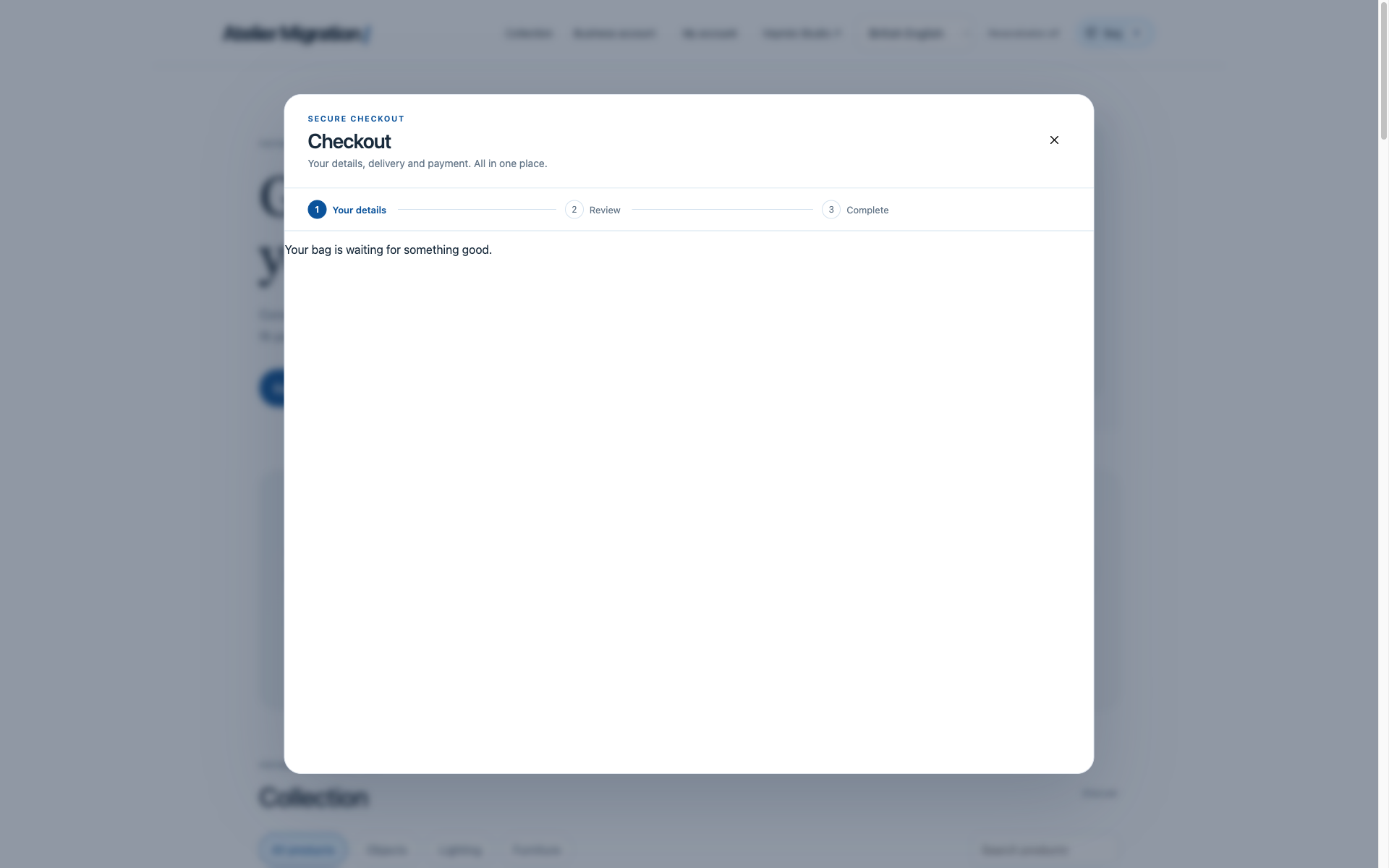
Back to the shop, a full reload and reopening Bag 0 showed the empty basket. The product's rich emphasis rendered natively and literal source HTML was absent.
Verification
The complete registered migration_assistant suite passed in 106.48 seconds,
including 29 CLI normalization cases, actual Rust/PostgreSQL import, native rich
mapping/reconciliation, existing five-provider fixtures, current/withdrawn rights,
foreign denial, cancellation, saved evidence, complete variants, original media and
simulated purchase/replay. Full workspace Rust tests and strict Clippy passed.
Fixture protocol checks remain separate from the actual WooCommerce run above.
The independent final review reproduced adjacent block-wrapper text joining and entity-only HTML bypass. The existing parser now preserves ordinary block boundaries, separates code/rule blocks in plain summaries and decodes named/numeric entities once, including encoded literal angle brackets. The expanded CLI and actual native-import cases assert both the independent expected summary and the stored native document. Executable-content rejection remains in force.
The repaired source passed complete required Linux CI and merged through PR #230. Its source-pinned Rust migration image also passed publication verification. The actual WooCommerce source, interrupted service and native purchase described here ran locally; image publication does not claim a hosted import of this shop.