
English source · 5 min
Product workspace: local acceptance, 29 October 2026
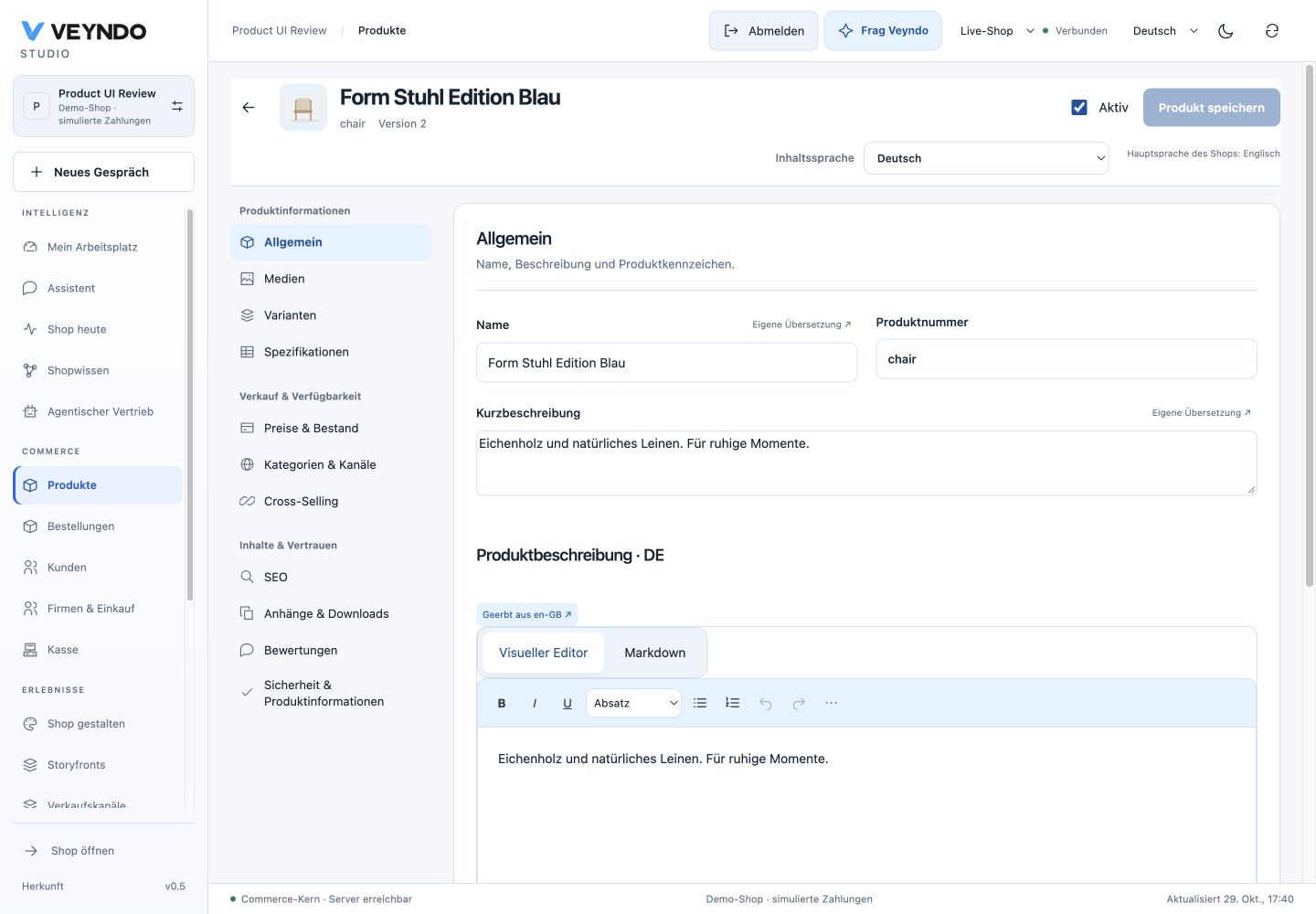
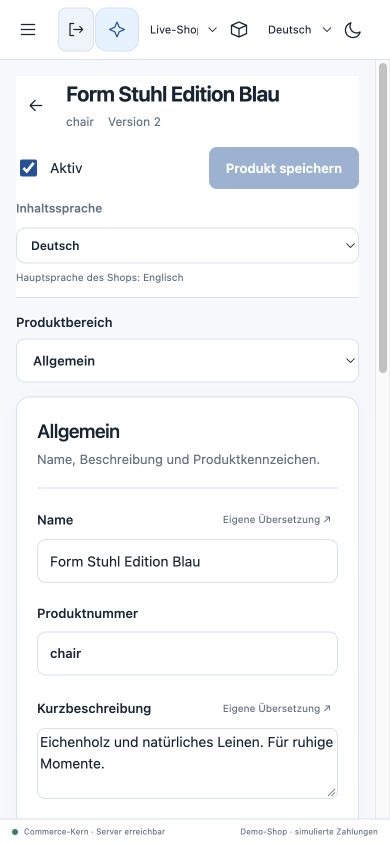
This change reorganizes the existing native product editor. The header contains product identity, revision, activation, save state and one shared content-language picker. Grouped sections retain installed app tabs and the same product context. Keyboard navigation uses manual activation. A grouped selector replaces the sidebar at narrow widths. History belongs to the editing panel; standalone assets/reviews keep their native behavior without nested card decoration.
Actual browser checks
The existing local Rust server on loopback port 8803 served the built frontend. An isolated synthetic merchant workspace was registered through the existing auth API and signed in through the actual browser login form. No production data or shared browser credentials were used.
- Opened the seeded chair, edited its German name and price to 199.95, saved through the native editor, reloaded and observed the new name, revision 2 and saved price.
- Created a separate inactive product through the actual form with an English main name, number UI-20261029, price 29.95 and stock 12. Reopened its price section and observed the saved price and stock.
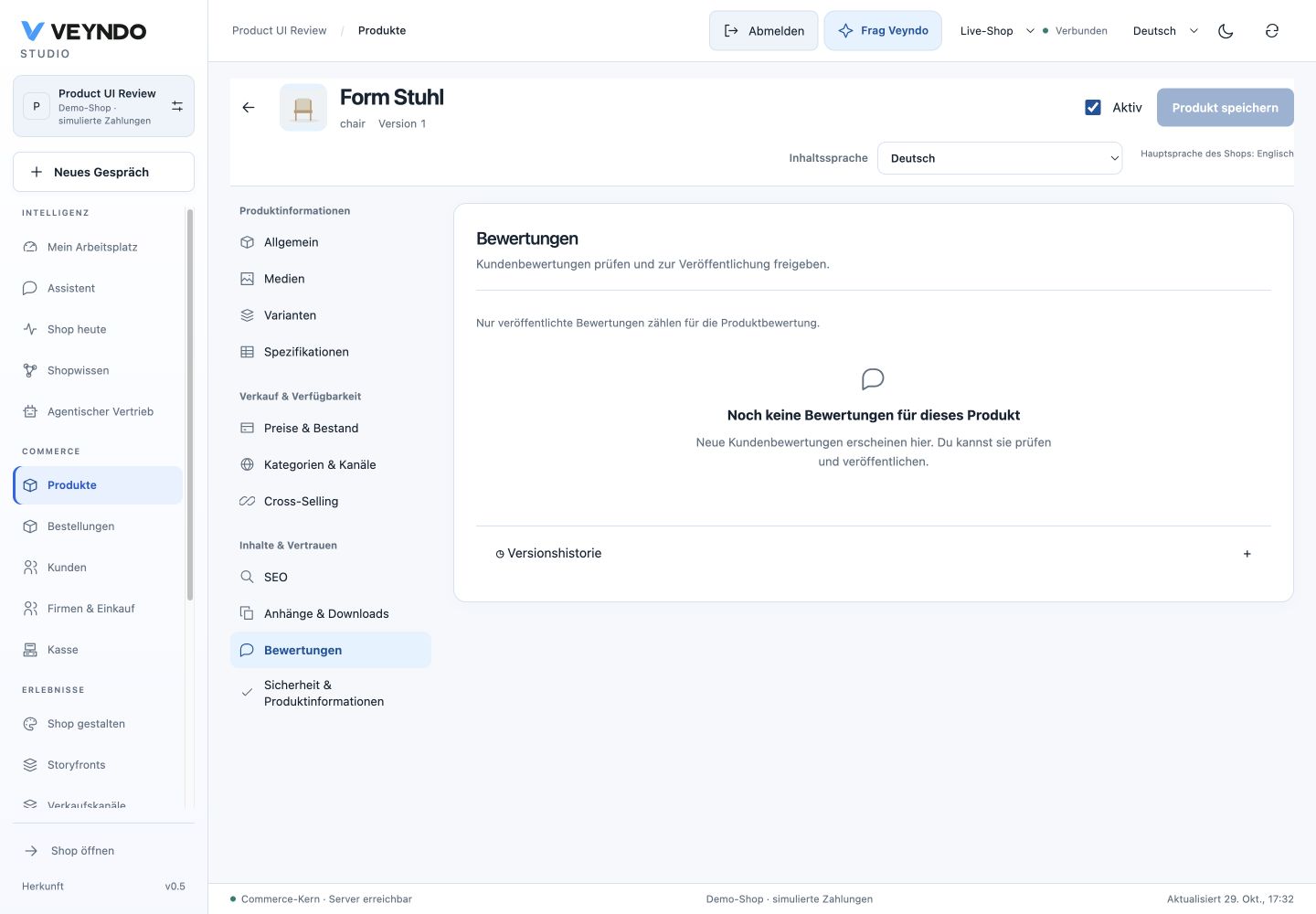
- Opened media, specifications, category/channel assignments, related products, SEO, attachments and safety details. Each selected the correct panel without a visible error. Opened variants and review moderation as well.
- At 1440px the product header measured 118px and the editing panel began at 222px from the viewport top, including the shared Studio topbar. Document width was exactly the viewport width.
- At 390px document width remained 390px, desktop tabs were hidden and the native grouped selector opened review moderation. The Studio menu was closed for the capture. Inspected dark colors and kept theme-aware surfaces; selected navigation text uses the full foreground color on the dark hover surface.
Automated verification
- All 151 frontend test files and 849 tests passed with coverage. The existing coverage floors passed without lowering thresholds.
- Targeted regressions preserve stock-safe revision writes, conflict drafts, read-only access, keyboard/mobile selection and a fifth content language with a German main locale. Deferred creation-default tests cover both an untouched draft and input entered before defaults arrive. Review tests use the original publication endpoint and exclude another product's reviews.
- Corrected an existing asynchronous email test: a disabled save button can mean saving is still running. The secret-clearing assertion now waits for completion. The mail implementation and permissions are unchanged.
- Production frontend build, formatting, localization, architecture, exact source inventory and source structure checks passed. Documentation was built and checked.
This is local native/browser acceptance. It does not claim a production rollout, real payment acceptance, exhaustive physical-device coverage or new app privileges.
Price and availability follow-up
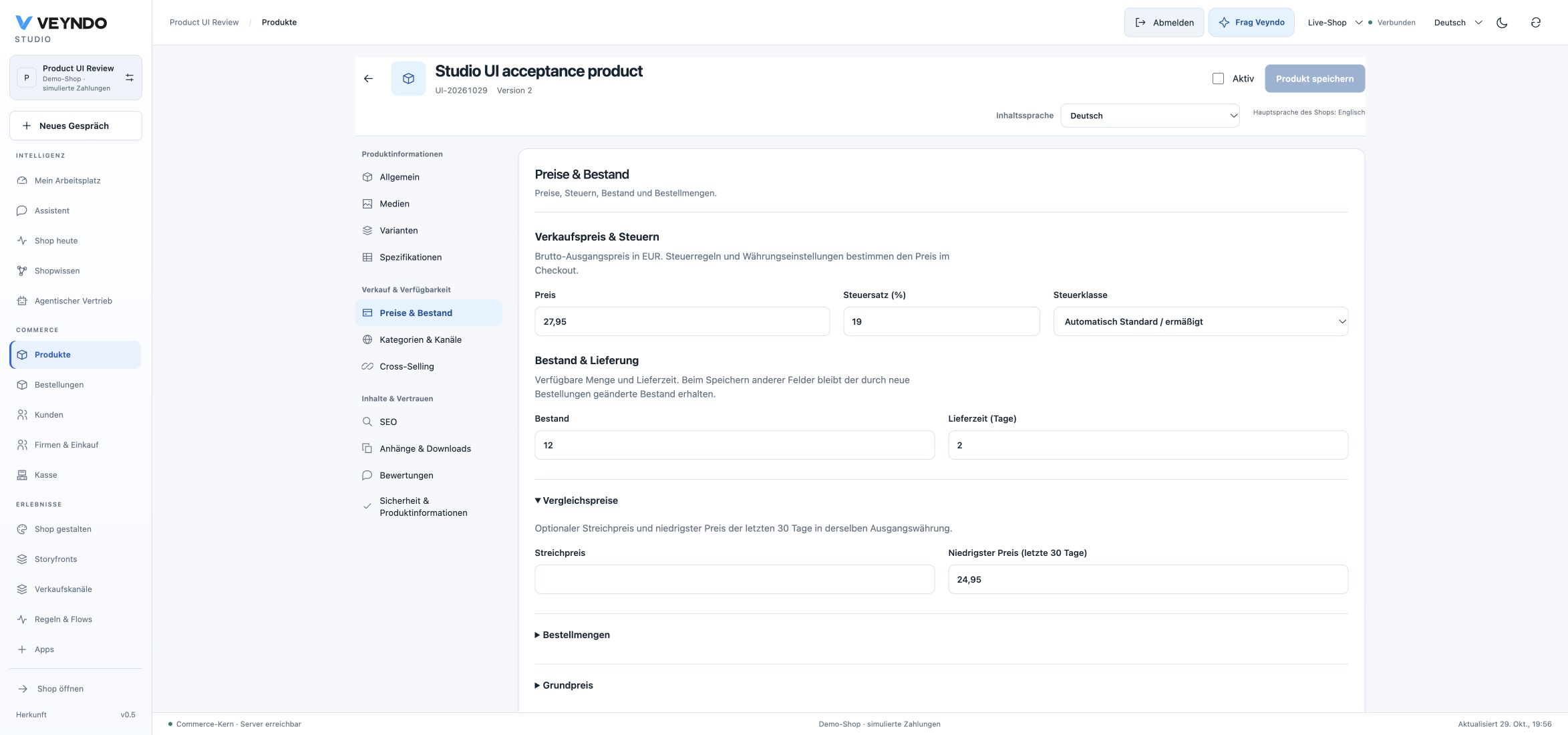
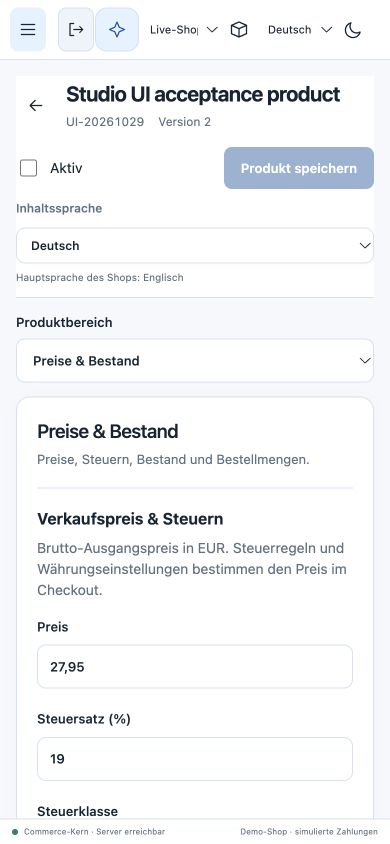
The native price panel groups selling price, tax rate and the actual configured tax class together. Stock and delivery follow. Comparison prices, order quantities, reference units, currency-specific prices and existing rule-based discount tiers have named expandable sections. Existing configured values open their section. No new pricing, tax, currency, inventory or permission owner is introduced.
In the same isolated local workspace, the browser opened synthetic product
UI-20261029, changed its gross base price to EUR 27.95 and its lowest 30-day
price to EUR 24.95, then saved through the ordinary native endpoint. A full
reload retained both amounts, revision 2 and stock 12; the comparison-price
section opened automatically. No hosted product record was changed.
At 390 × 844px the product section picker and individual fields remain inside the
viewport: both innerWidth and document width are 390px. The temporary viewport
was reset after the check. The main Studio menu was closed for the capture.
Targeted product/editor/currency checks passed: 22 distinct tests across the three affected suites, including a moved tax-class write/read-only regression, cent-step comparison editing and stock omission on content saves. Production frontend build, localization and architecture passed; the Impeccable source scan reported no findings. The daily complete test/coverage schedule is retained.
Gallery ordering and variant creation follow-up
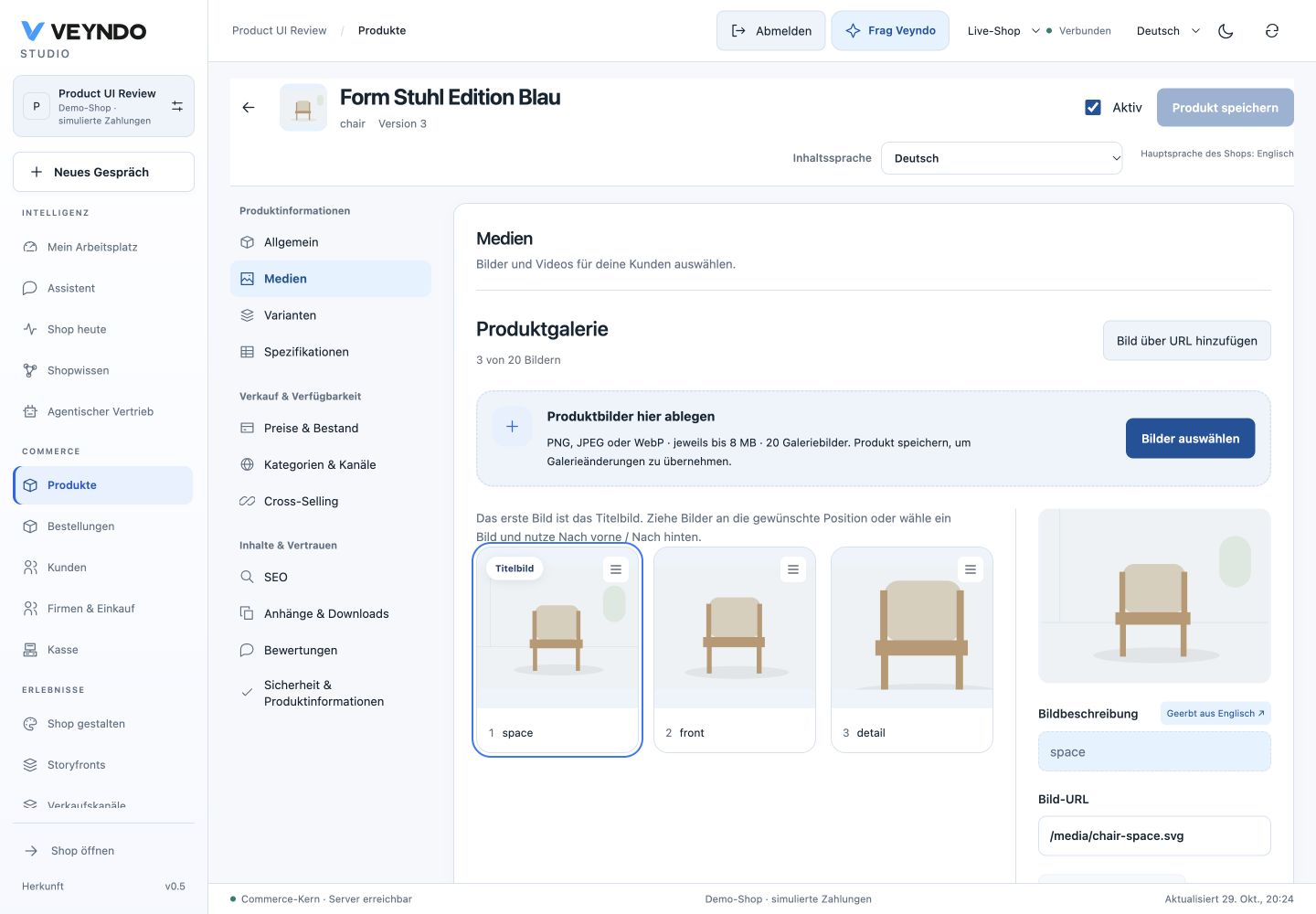
The product gallery now supports a local image drag onto another image position. The destination is visible during the drag; the first position remains the cover. Selection, translated alt text and the native aggregate save remain shared with the existing inspector controls. A revoked write grant closes a pending drag. Uploads use a compact row when the gallery already has images.
The actual Chrome browser dragged the third chair image (space) onto the first
position in the isolated local tenant. Saving returned revision 3, and a full
reload retained space, front, detail in that order. The ordinary product save
owned the change; no hosted product records were modified.
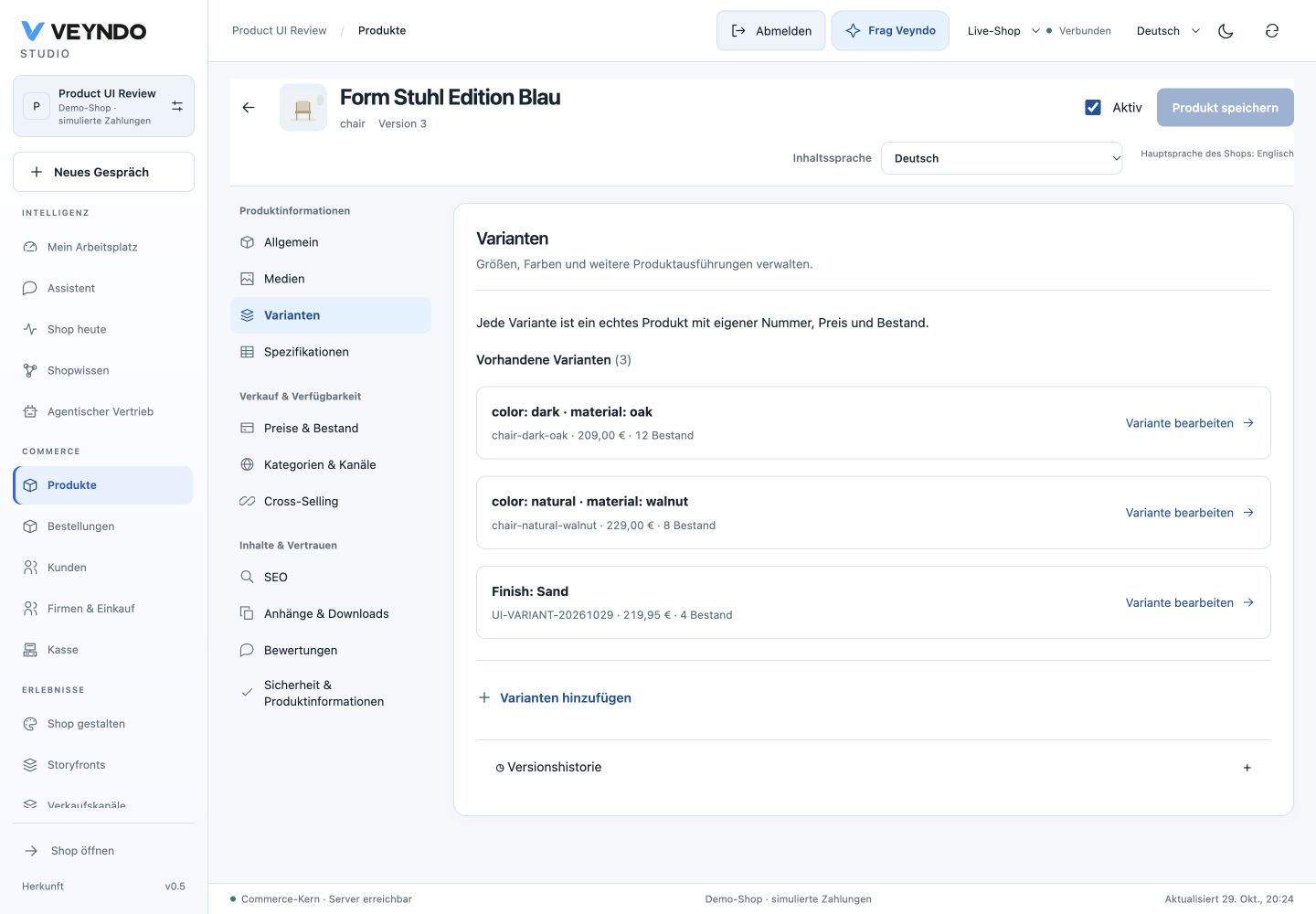
Variants show existing children first. The optional Add variants section opens
option groups and reviewable combinations. In the same native browser, one Finish:
Sand combination was reviewed, assigned number UI-VARIANT-20261029, price EUR
219.95 and stock 4, then created. Its independent product editor retained those
values and inactive status; the parent link returned to the original family. A
full reload showed three saved variants. Existing duplicate detection and
partial-batch retry remain covered by the targeted suite.
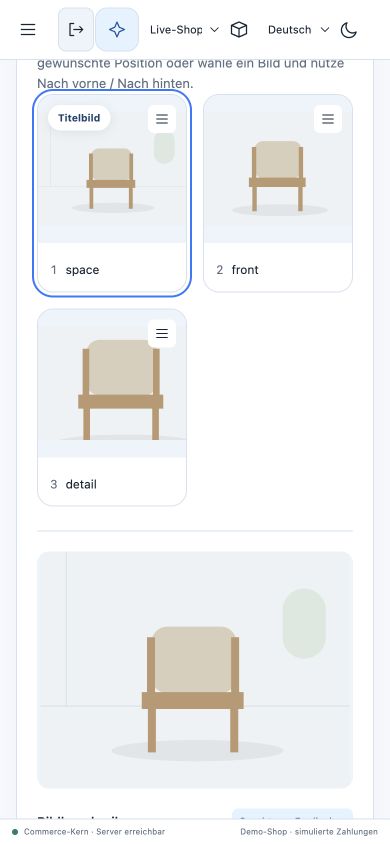
At 1440px the family actions and gallery fit beside the section navigation. At 390px the gallery becomes two columns and the image inspector follows below; both viewport and document width are 390px. The same controls support keyboard and touch ordering. The mobile test also exposed and fixed an existing selection jump after moving the initial image with the arrows.
Nineteen distinct targeted tests cover the affected media and variant suites, including internal-only drops, metadata preservation, write revocation, initial selection after arrow movement, explicit variant setup, existing combinations and partial failure. Frontend build, localization, architecture, source inventory and Impeccable checks pass. Complete tests/coverage retain the daily workflow cadence. These screenshots and mutations are local native browser evidence; public delivery is verified separately against the deployed build.