
English source · 4 min
Native app fields and repeated checkout — hosted 17 October 2026
This receipt records an actual public product-extension journey and original Storyfront purchase. All contacts, products and payments used for acceptance are synthetic. It does not close the complete business-capability programme.
Delivered source and recovery chain
- PR 152 passed the complete required
Linux verification
at
f627f9d69b3df34d3e5b31100dd6c12a3deef505and merged asbe4d6cf9e7ea92f3c9600144d3cb6f730cfc8d64. - Both commits have the identical Git tree
aa608fbb05d2bc4d9bb8407088d14fc82fee7a80. The prebuilt Northflank imageright-increase-7968therefore contains the merged, verified source. - A fresh managed PostgreSQL disk snapshot
app-core-extensions-20261017-f627f9dcompleted successfully: 6 GB, 01:07:56–01:08:54 Europe/Berlin. No schema migration was added by this release. - The existing migration job used that exact image and completed successfully:
run
31d6c179-01a3-4abc-89e0-114cdbd2a423, 01:16:01–01:16:11 Europe/Berlin. - Core deployment
vendune-core-5c559c9c86started at 01:31:53 Europe/Berlin. Its new pod reached 1/1 passing with zero restarts, and the public Core health endpoint returned its PostgreSQL-backedstatus=okresponse. - The redundant post-merge Northflank workflow
e804bc98-4871-47a7-81d7-2155350dd38bwas aborted after the equivalent manual backup/migration/deployment chain. Required GitHub checks and the independent main-branch verification, documentation and packaged-preview jobs were retained. The private Experience service remains the previously recordedb40b386.
The preceding failed verification at e19f349 remains linked in the
POS snapshot/startup recovery record.
The fixed image is delivered; no production database outage was induced to
claim failover acceptance.
Public app journey
In the existing synthetic Release Abnahme 16 Oktober shop, a new private App-Felder Abnahme 17.10. environment was created through Studio.
- New App → Admin app created an editable project, not an imported prebuilt package. Its model was bound to Product, and its segment field indexed.
- Saving version 0.1.0 passed actual server admission. The generated native anchor retained real model labels. The version installed in the selected private environment.
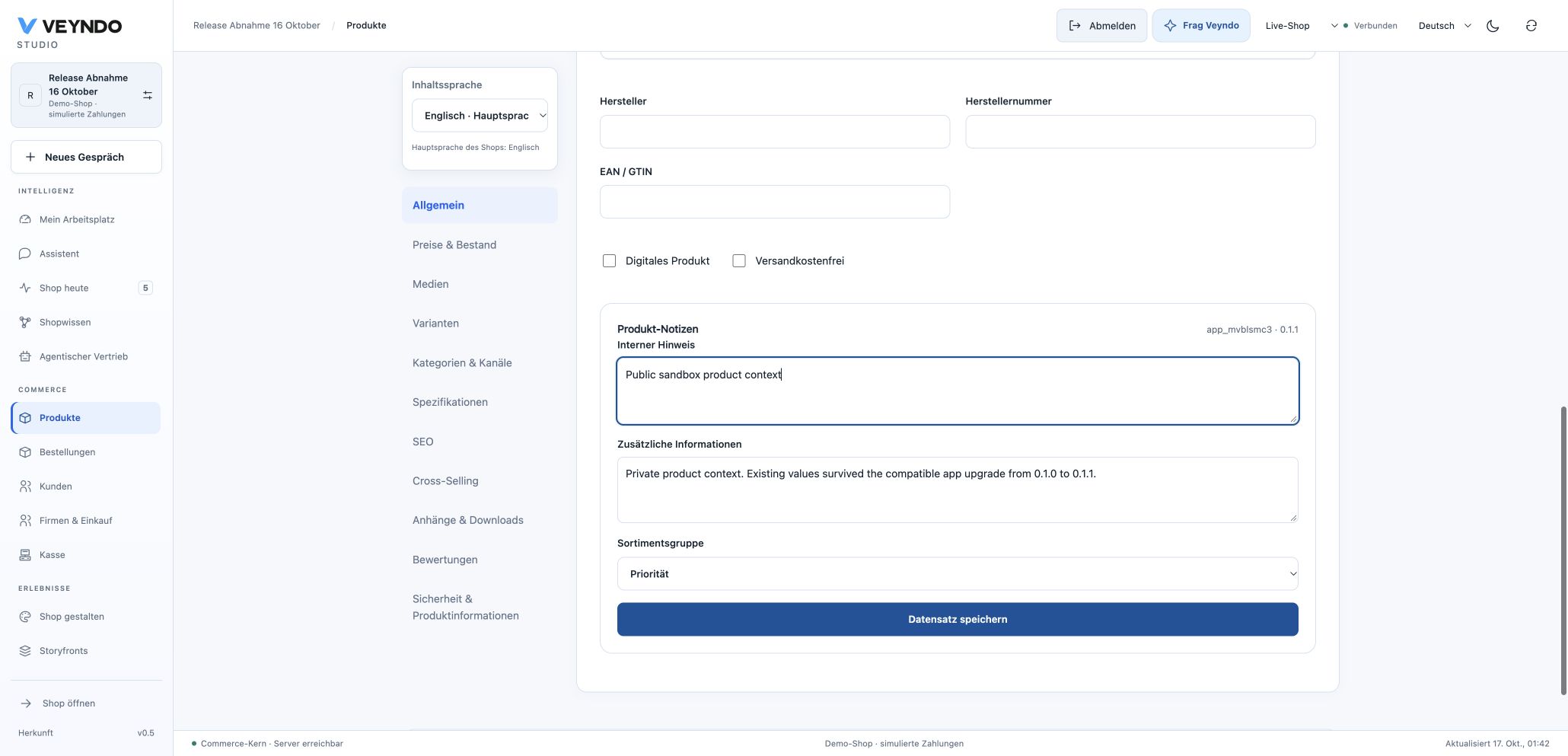
- The native desk product editor exposed the app fields. Its own save action stored the title, information and priority segment through the existing app record API, without saving native stock or prices.
- A compatible 0.1.1 version added explicit German model/field labels. After installation, a newly loaded native product retained the original values and accepted a further revisioned save.
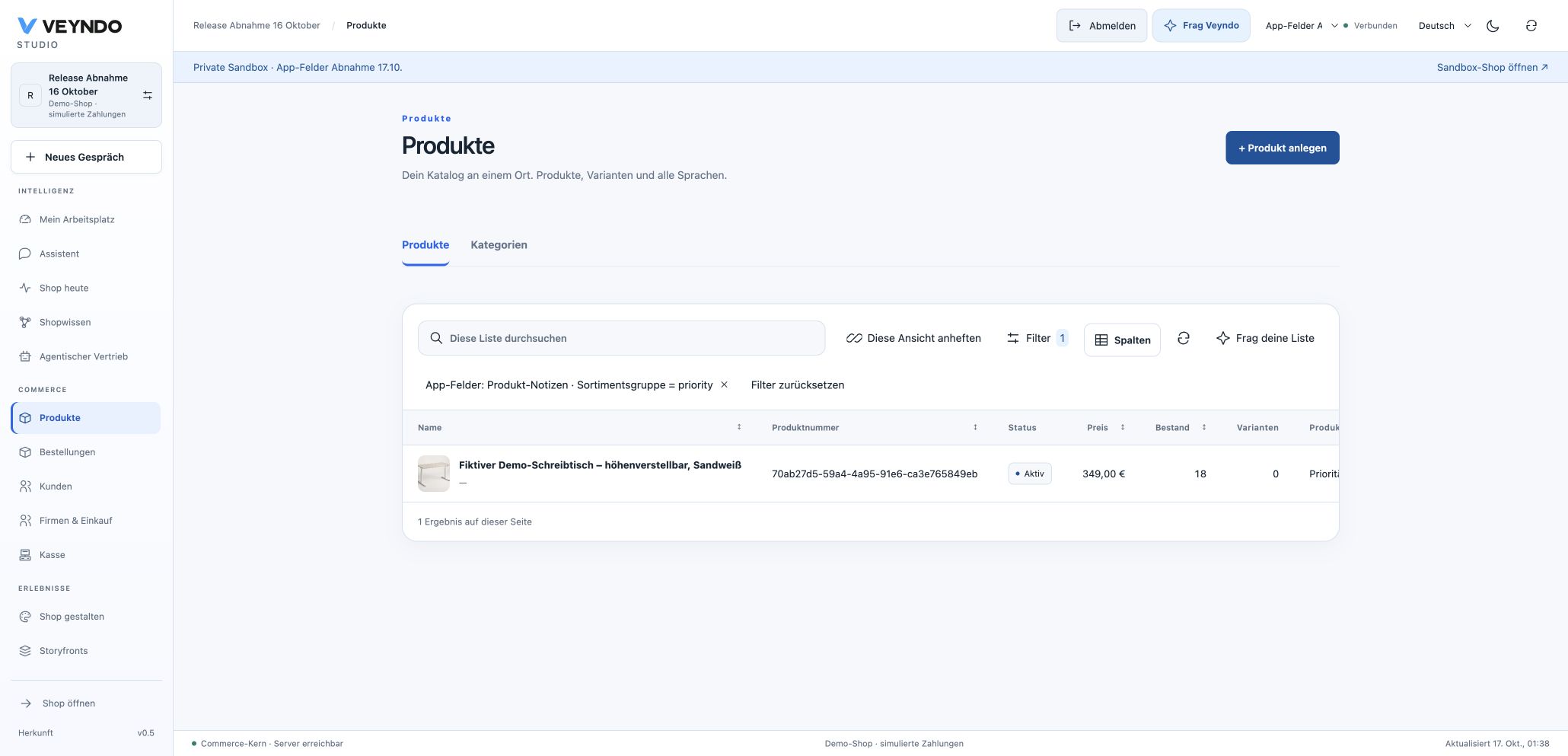
- The native product grid exposed the optional Produkt-Notizen ·
Sortimentsgruppe column. Exact value
priorityreturned one product;no-such-groupreturned zero; clearing the filter restored three. - Before publication the live native product had no private-stage extension. The central release view then selected exactly the app package and its one product record. Publication succeeded, left no pending sandbox differences, and a fresh live product read showed version 0.1.1 and the saved values.
The accepted project is app_mvblsmc3; product
70ab27d5-59a4-4a95-91e6-ca3e765849eb; app record
bb60c1d4-2878-4535-9f32-586a55a78643. These are synthetic object identifiers,
not access credentials. The sample's UI/model/data remain in its app definition;
Core implements the generic binding and current-authority contract.
Original embedded Storyfront checkout
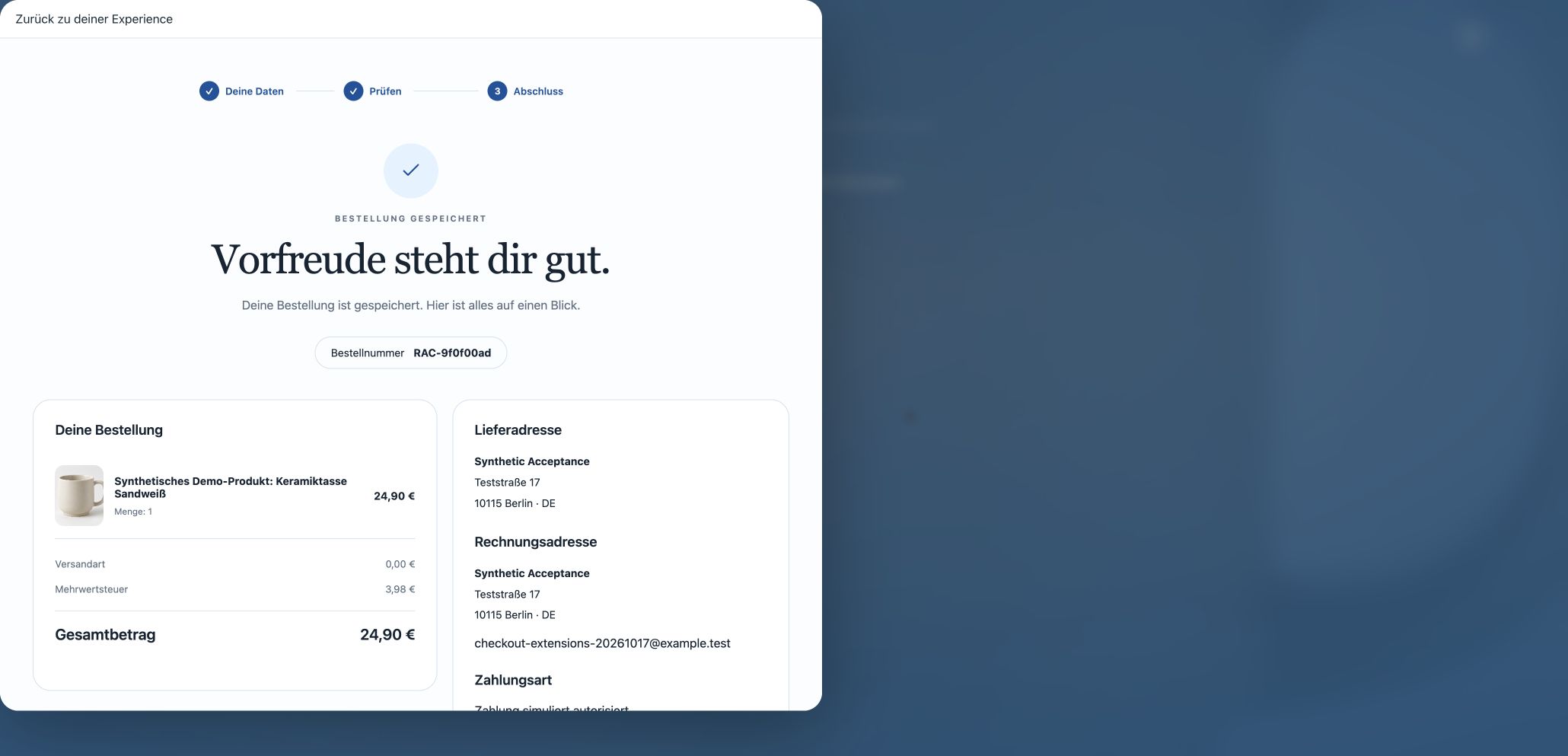
A fresh native Chrome tab opened the existing Lumen Story Lab 15 Oct Experience. The original Storyfront product was added to its own bag, and Checkout opened the actual Veyndo iframe. Contact/address fields, privacy selection, the reviewed amount and final confirmation were visible. Optional tracking was rejected.
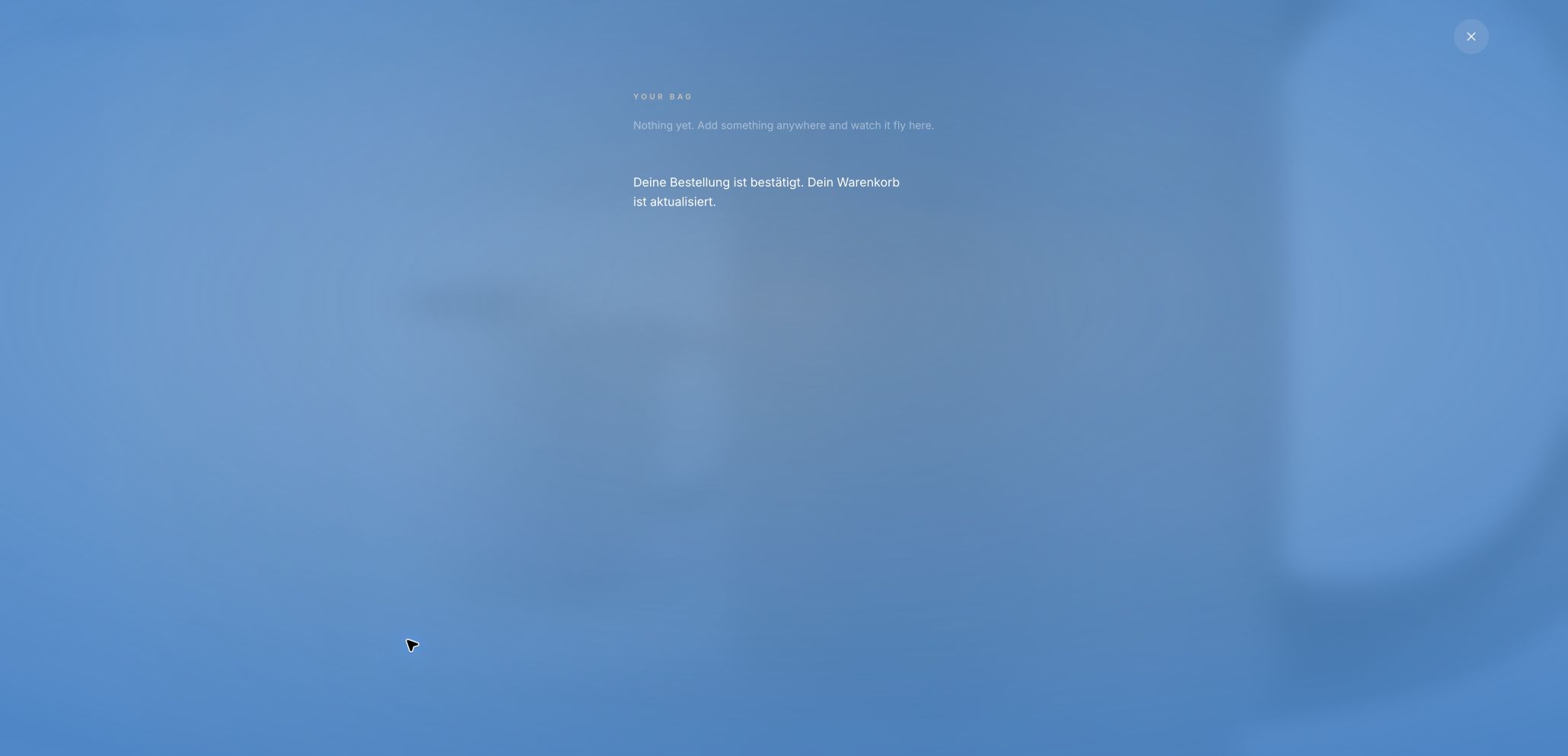
The result was order RAC-9f0f00ad, one synthetic ceramic cup, EUR 24.90, German product name, and simulated authorized payment. The iframe's own Zurück zum Shop returned to the original Experience. Its original bag showed Nothing yet and the German confirmed-order/cart-updated message.
The fresh tab was not attached to the tab debugger during document loading. After confirmation it was attached only to capture the existing page and complete the return. This does not relabel earlier debugger-paused empty frames as passes.
Verification scope
All 99 registered local suites passed: 59 HTTP, 32 provider/worker, four browser-contract and four tooling suites. The temporary checkout needed real Git metadata, built frontend assets and the normal precompression step; those preparation failures were retained and the affected/remaining registered suites repeated without relaxed assertions. Complete Linux CI then passed independently, including the full restricted-login and transaction-pooler repetitions, coverage gates, 636 frontend tests, formal negative controls and the original PHP money comparisons. The local exact-money boundary checked 1,344 cases.
Product, Customer, Order and Company bindings have actual local PostgreSQL/HTTP/ MCP/role coverage. This hosted walkthrough exercises the product lifecycle; it is not a separate public acceptance for all four object editors, every graph visualization, public UCP fields, arbitrary source builds or historical replay. Real settlement, provider mail delivery, fiscal invoice/refund acceptance and the Apple callback repair remain separate. See current status and the app-system matrix.