
English source · 4 min
Inward agentic commerce: public acceptance — 18 October 2026
The public Core now accepts native agent carts and prepares inward shop imports. The following are actual public browser journeys with fictional data. This record complements the local acceptance and feature handbook; it does not certify unrelated features.
Delivered source and checks
- Production source:
d5c4724d6bf1d5b595300896d01f6ae586434c37. - Northflank Core image:
smiling-driving-6446; deploymentvendune-core-58f5569684. One running replica, zero restarts and passing readiness were observed. - Full required verify run
passed on
dd19c226d406c3c7c3c70075014c04bbe7ed761f: all 101 integration suites, 657 frontend tests, Rust workspace/Clippy, contracts, localization, Lean/conformance and negative mutation controls, PHP differentials and unchanged coverage gates. Those formal checks retain their documented selected-policy scope. - PR 166 merged after the required
check passed, as
1bb2e5ef0db7d7c9976745973f7532429740a75e. All twelve production input trees match between image source, tested head and merged main. The last pre-merge change only repairs the handoff test expectation. - The tested candidate was deployed for public acceptance while final CI completed; final merge waited for the unchanged required gate. No production migration, database privilege change or private Experience rollout was needed.
- The original Experience remains
b40b386, imageeducated-sort-2532.
Agent cart → native purchase → empty cart
Public UCP discovery advertised dev.ucp.shopping.cart. An actual
POST /ucp/v1/carts in the synthetic Release Abnahme shop returned native totals
and a canonical single-use continuation. The continuation opened the German native
checkout; no ticket or bearer value is published in this receipt.
A fictional contact/address, pickup and the explicitly simulated native demo-card completed order RAC-81a64f7e, quantity one, EUR 349.00. The German product name and amount were retained; the receipt identified simulated authorization. Returning to the shop and reloading both showed Warenkorb 0.
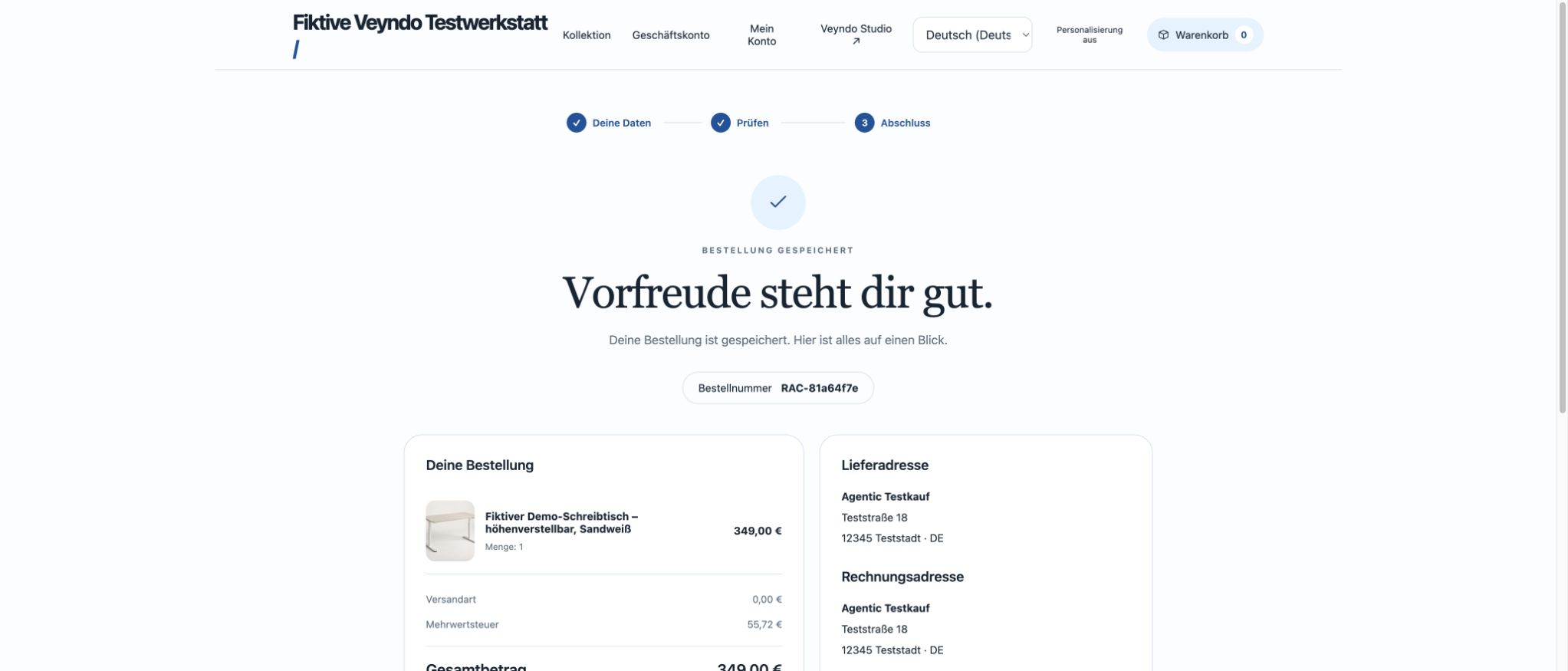
Original Storyfront → embedded native checkout → original empty bag
On the public Lumen Story Lab Experience, the original bag began empty. Adding one synthetic ceramic mug opened the actual native Veyndo checkout inside the Storyfront iframe, including visible contact/address, shipping, payment and review.
The fictional purchase used the native demo-card: goods EUR 24.90, shipping EUR 4.90, total EUR 29.80. Order RAC-df45f7f6 retained the German product name and quantity. The original Storyfront bag changed to zero after verified completion. The receipt's return closed the iframe and retained the original Experience product URL. A full page reload and reopening the original bag still showed zero and its empty-bag message. No user-operated test or browser security bypass was used.
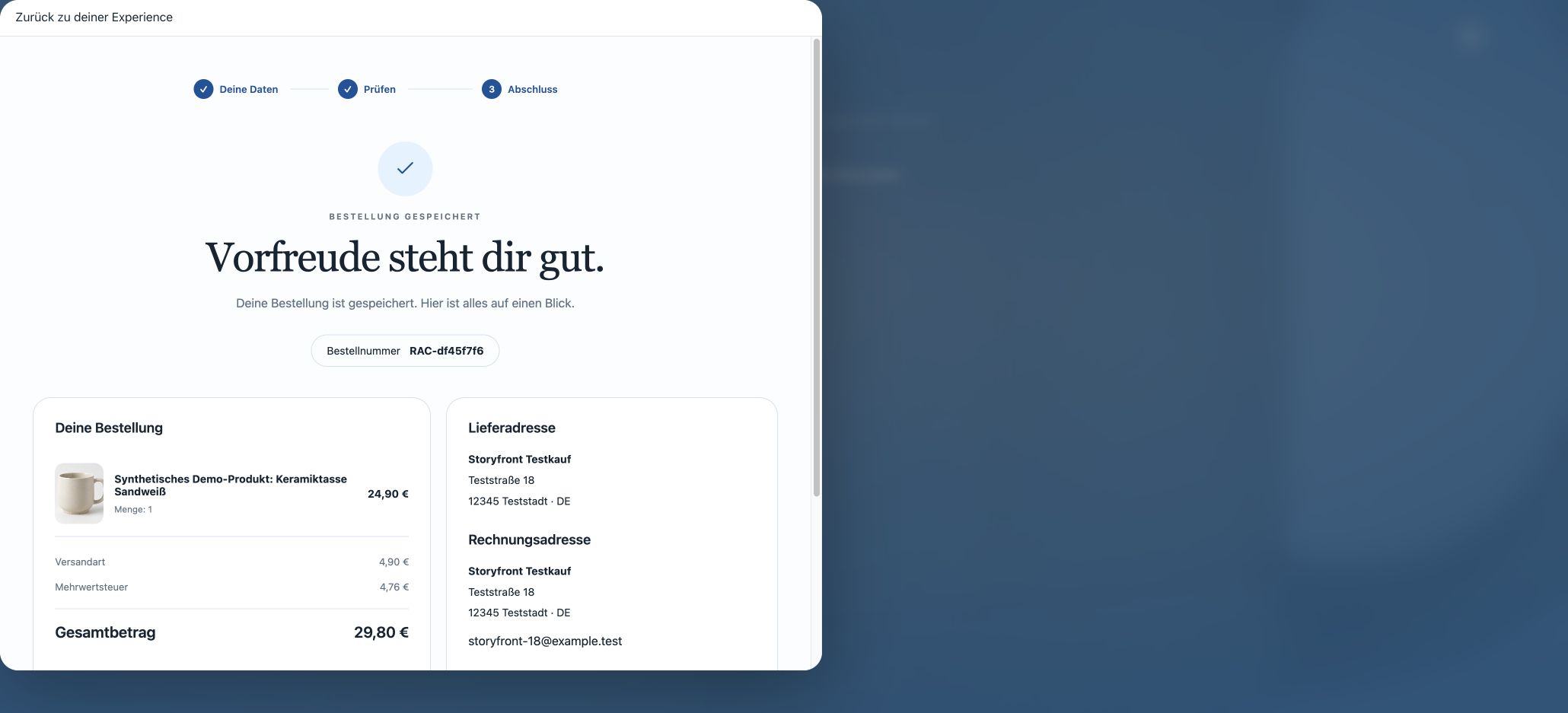
The earlier 18 October receipt retains the preceding image and order; this is a new acceptance on the new Core.
Shopify CSV → private native products
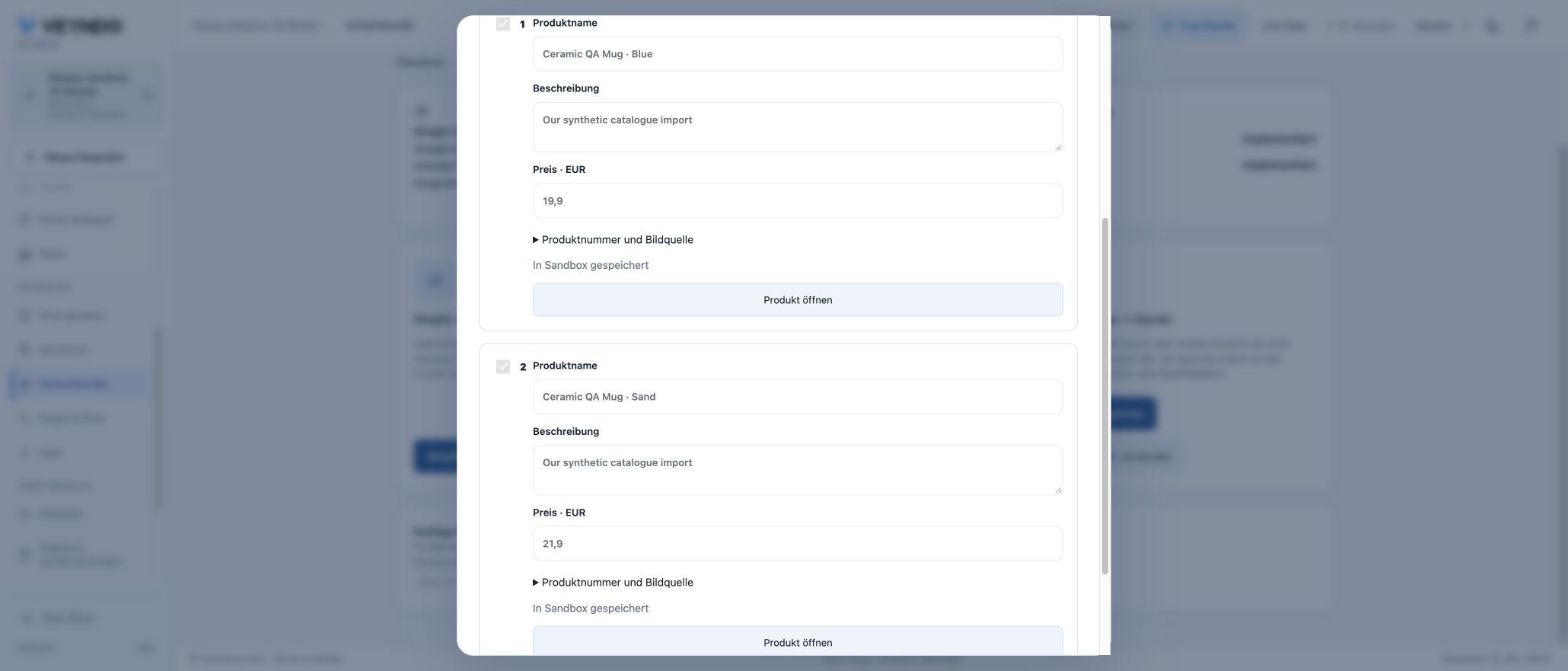
The normal existing Google sign-in opened the merchant Studio. In Sales channels → AI channels & imports, the Shopify action opened native catalogue preparation. A new private sandbox, Sortiment aufbauen, received the uploaded synthetic CSV. Two priced variants were reviewed and explicitly saved:
| Native product | Price | Initial stock |
|---|---|---|
| Ceramic QA Mug · Blue | EUR 19.90 | 0 |
| Ceramic QA Mug · Sand | EUR 21.90 | 0 |
Both rows showed In Sandbox gespeichert. Opening the Blue variant in the normal native product editor showed revision one, price, configured tax and zero stock, along with the already installed native Product Notes app fields. An independent live catalogue query still returned exactly the original three products; neither imported variant was published.
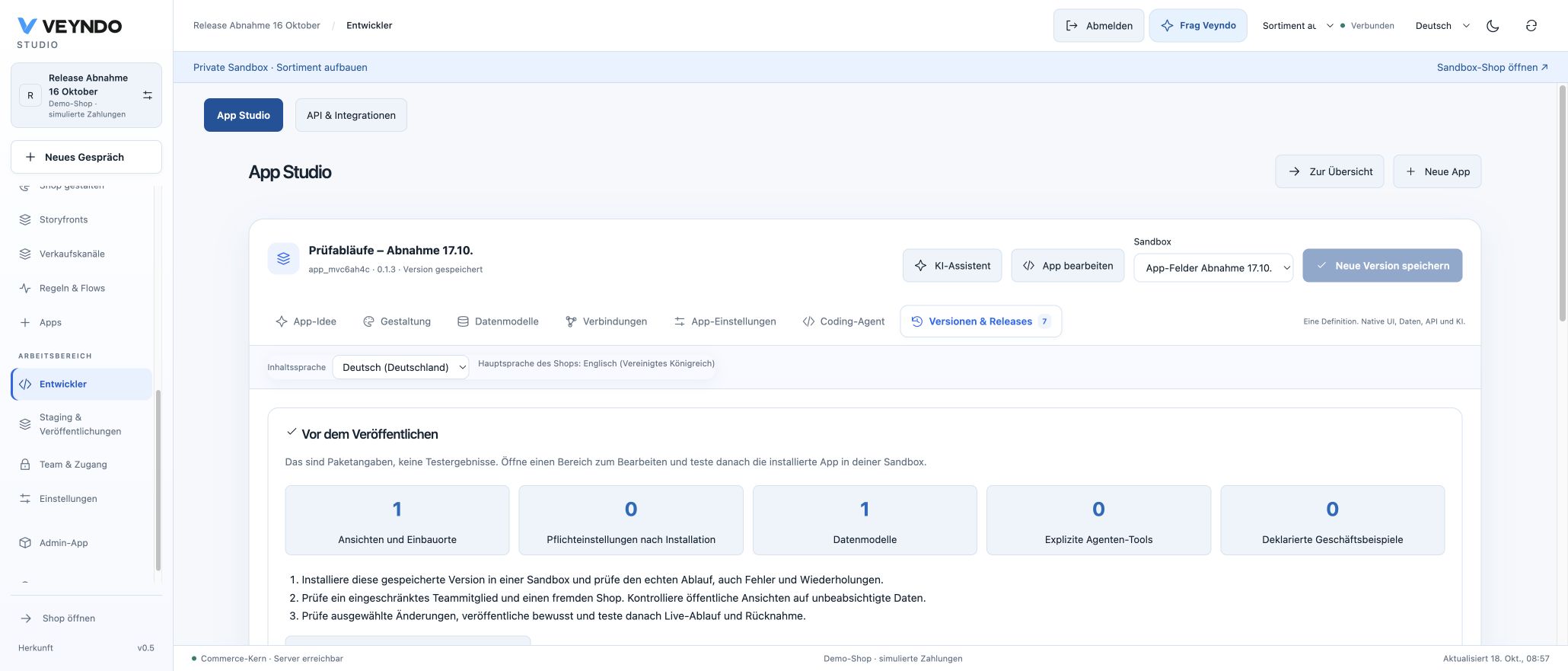
App diagnostics and contextual agent
The existing app's Versions & releases view showed the new declaration counts and explicitly distinguished package declarations from executed tests. Its test-plan action opened the shared contextual AI drawer, preserved the app identity and prepared positive, denial, retry and rollback instructions. No model call was sent in this hosted inspection and no app draft was changed.
Shopware Payments: actual adapter, synthetic provider
At the user's request, the separately held actual private Rust Shopware Payments adapter was tested against this Core and a local synthetic PSP. The UCP transfer, native consume, scoped hosted session, verified capture, partial refund, duplicate/restart replay, authorization/void and SEPA checks passed. No real money was charged. Private source and partner configuration remain outside this repository.
The two public browser purchases above used the native demo-card. They are not represented as public Shopware Payments purchases. Real PSP settlement, wallet/3DS redirects and a publicly configured Shopware Payments provider remain separate acceptance work.
External and experimental boundaries
Google merchant admission, Muse partnerships, provider regional availability, continuous supplier stock/order synchronization and native WebMCP execution in a particular browser are not established by these journeys. Shared browser-agent cart contracts and feature detection passed automated tests; no browser-engine tool call was claimed. Inward supplier preparation remains read-only until explicit native draft creation and selected publication. All screenshots use fictional test data.